How to Build Content That Ranks and Gets Cited by AI

執筆者: Nemanja Milenkovic · 最終更新 2026-07-09

Search engines and AI assistants are different products that often reward the same work. A practical guide to building one content system that earns rankings and citations at once.

  • GEO
  • SEO
  • AI search
  • content strategy

Two games, one strategy

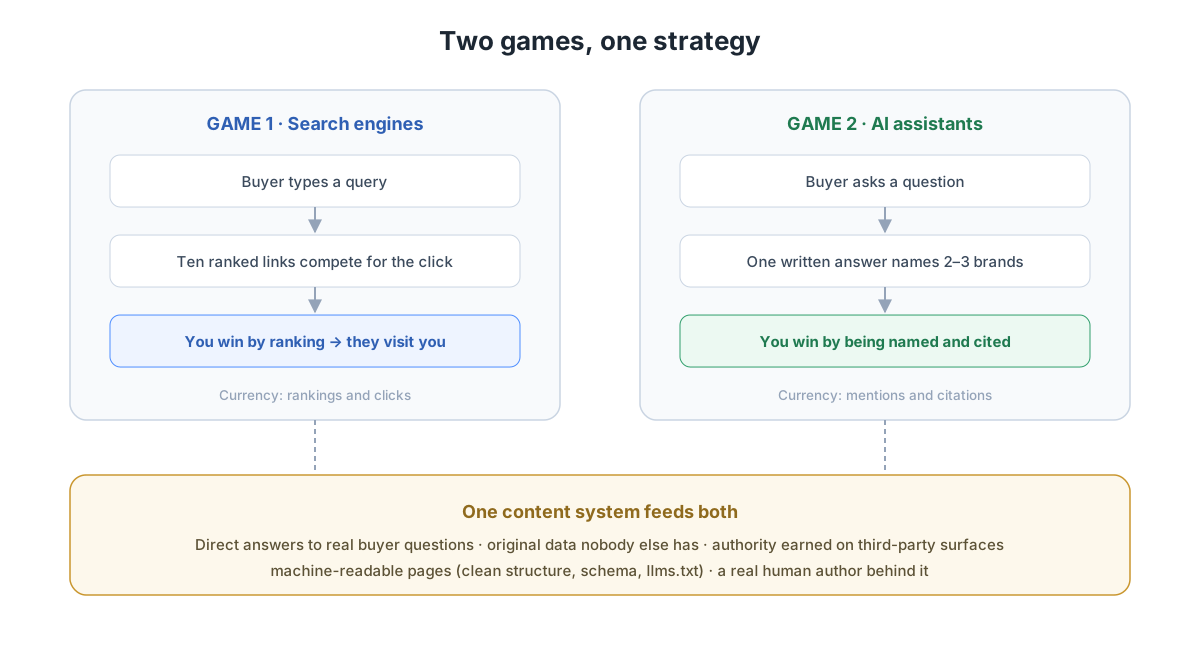
There are two ways people find you now. They search, and a ranked list of links competes for the click. Or they ask an assistant, and a single written answer names two or three brands. These are different games with different scoreboards. One counts rankings and clicks. The other counts mentions and citations.

The good news is that you do not need two content teams. The work that wins one game largely wins the other, because both reward pages that are clear, structured, original, and worth trusting.

Diagram comparing search engines, where ranked links compete for a click, with AI assistants, where one answer names a few brands. Both are fed by one content system built on direct answers, original data, authority, machine-readable pages, and a real author.
Different scoreboards, one underlying content system.

Answer the question near the top

Whether the reader is a person skimming, a crawler indexing, or a model summarizing your page for someone else, the first job is the same. Explain yourself fast. Name the topic plainly, answer the obvious question in the first paragraph, and make the rest easy to scan.

This matters more than it used to. AI systems often work by lifting a sentence or two. If your clearest explanation is buried halfway down the page, you are handing that quote to whoever wrote theirs higher up.

Build collections, not scattered posts

A single strong page is fragile. A cluster of pages that covers a topic from every angle is durable. When you answer the definitions, the comparisons, the how-tos, and the edge cases, you match more of the ways people ask, and you become the site that clearly owns the subject.

AI search leans on this even harder than classic search. Assistants expand one question into many smaller ones behind the scenes. Deep coverage means more of those smaller questions land on you.

Publish something that exists nowhere else

The strongest reason for anyone, human or machine, to cite you is that you said something they cannot get elsewhere. A number from your own data. A firsthand test. A real example with a real result. Pages that only restate the existing consensus add nothing new, and both rankings and citations increasingly discount them.

  • Share small numbers from your own work, even modest ones.
  • Add concrete examples instead of general advice.
  • State an opinion with your reasoning, not a neutral summary.
  • Show what changed over time, since a trend is more citable than a snapshot.

Make the page easy for machines to read

Great content still needs to be readable by software. Use clear headings that match how people phrase questions. Add structured data so systems can parse what your page is about. Keep the important facts in text, not locked inside images or PDFs. Put a real, named author behind the work, because a citable human is easier to trust than an anonymous page.

None of this is exotic. It is the same hygiene that has always helped search, applied with the knowledge that a model may now be the one reading.

Keep it fresh, and mean it

Freshness is not a fake date bump. It is whether the numbers, prices, and recommendations on the page still hold. Retrieval-backed answers favor current sources for anything time-sensitive, so a maintained page with a visible update history beats an identical page that looks abandoned. Update on a schedule, and show your work.

The takeaway

Stop thinking of AI visibility as a separate project bolted onto SEO. Build one content system that answers real questions clearly, covers topics deeply, offers something original, reads cleanly for machines, and stays current. Do that, and you show up in the ranked list and inside the answer. Same work, two wins.