AI Assistants Are Quietly Repeating Your Product's Weakest Points
We ran a stronger AI visibility test across 10 software brands. The uncomfortable finding: assistants repeat the same pricing, setup, customization, and trust complaints buyers already worry about.
- GEO
- AI visibility
- software marketing
The quiet risk in AI search
Most software companies think AI visibility is about whether they get mentioned. That is only the first question. The more painful question is what the assistant says after your name appears.
In a stronger July 2026 test, we ran 10 well known software brands through eight buyer-style prompts across DeepSeek V4 Flash, Gemini 2.5 Flash, and GPT-4o mini. The assistants did not just recommend tools. They repeated the same doubts buyers already search for: high pricing, painful setup, weak customization, limited reporting, data accuracy, privacy concerns, and support problems.
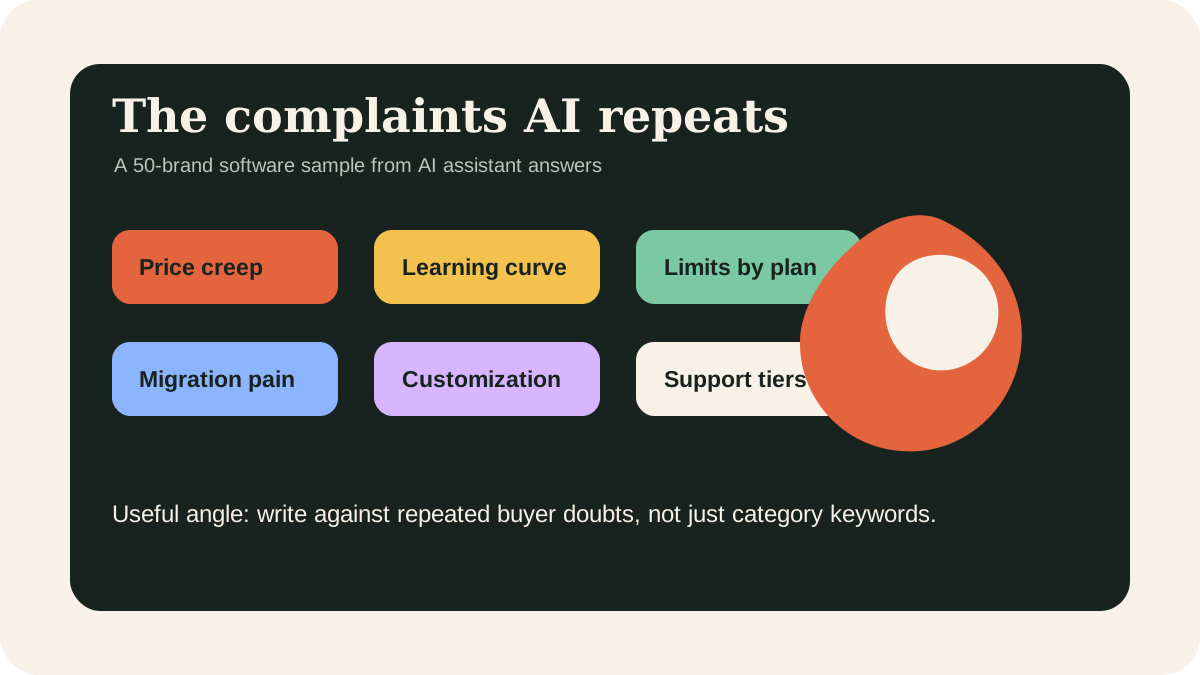
The repeated complaints were specific
- Salesforce was repeatedly tied to high cost, setup complexity, and a steep learning curve.
- HubSpot was repeatedly tied to pricing at scale and limited customization compared with Salesforce.
- Semrush and Ahrefs both attracted pricing and learning-curve complaints.
- Similarweb was tied to cost and data accuracy questions for smaller sites.
- Perplexity was tied to occasional inaccuracies, limited customization, and citation trust questions.
- OpenAI was tied to privacy, bias, ethical use, and enterprise control concerns.
None of that is shocking. That is exactly why it matters. AI answers are most dangerous when they repeat ordinary buyer doubts in a calm, confident voice.
Why this can hurt SEO and GEO
A search result sends the buyer to a page. An AI answer can compress the market into one paragraph before the buyer clicks anything. If that paragraph says your product is expensive, hard to customize, or risky for enterprise use, the buyer may never reach your site.
The fix is not to pretend the complaints do not exist. The fix is to answer them better than review sites, competitors, and old forum threads do. If pricing is a concern, publish a plain-language cost guide. If migration is hard, publish the migration plan. If customization is limited, say where the limit is and who should choose something else.
What to publish before AI writes the objection for you
- A limitations page that names the buyer profile you are not built for.
- A pricing-at-scale page that explains when costs rise and why.
- A migration page with time, data, owners, and common failure points.
- A comparison page for every competitor assistants already mention next to you.
- A source map showing which review sites, docs, and articles are likely shaping the answer.
Notes
- Research sample: 10 companies, eight prompts per company, three OpenRouter models, 196 successful answers out of 240 planned calls, run on 2026-07-11. Source-domain clues are directional, not verified live citations.