OpenAI vs Perplexity Shows The Split In AI Search
AI assistants framed OpenAI and Perplexity very differently. One looked like a broad AI platform. The other looked like an answer engine for cited research.
- AI platforms
- AI search
- GEO
The split is becoming clear
OpenAI and Perplexity both show up in AI search conversations, but assistants do not frame them the same way. In our stronger sample, OpenAI averaged 82.8 and Perplexity averaged 79.8. The score gap is less interesting than the positioning gap.
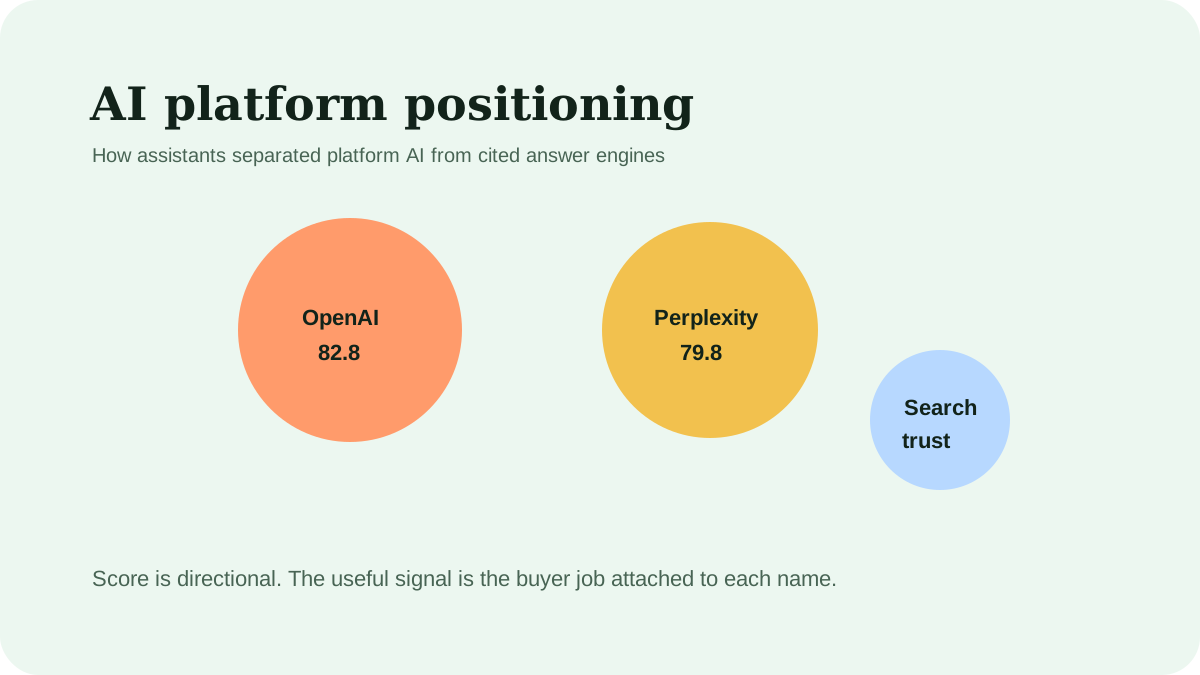
OpenAI was framed as the platform
Assistants tied OpenAI to broad adoption, frontier model capability, developer ecosystem, enterprise AI, and general-purpose AI workflows. The repeated concerns were privacy, bias, ethical use, governance, and enterprise control.
That makes OpenAI easy to recommend when the buyer asks for a platform. It also means the trust and control questions need to be answered in public, because assistants already bring them up.
Perplexity was framed as the cited answer engine
Perplexity was tied to AI search, live answers, citations, research workflows, and alternatives to Google or ChatGPT for information discovery. Its repeated concerns were occasional inaccuracies, citation quality, limited customization, and depth on complex queries.
That is a different buyer story. Perplexity competes on answer trust, not just model quality.
The content opportunity
Skip another generic 'best AI tools' article. Write use-case content instead: OpenAI vs Perplexity for research, ChatGPT vs Perplexity for citations, Perplexity alternatives for teams, and AI search tools for market research.
For GEO, the lesson is simple. If your product sits in a fast-changing AI category, you need public pages that define the exact job you want assistants to attach to your name.
Notes
- Research sample: OpenAI and Perplexity subset from a 10-company stronger run, eight prompts per company, three OpenRouter models, 196 successful answers out of 240 planned calls, run on 2026-07-11. This was not a live-citation run.